
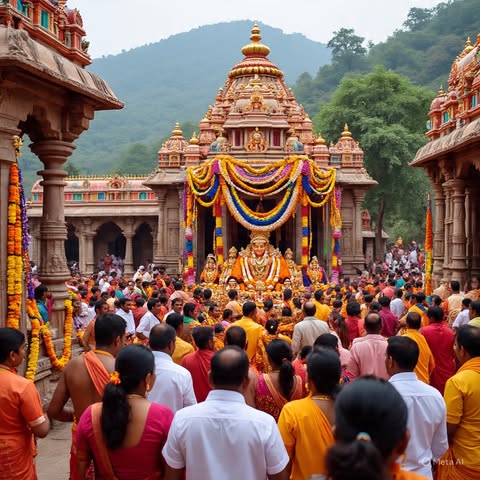

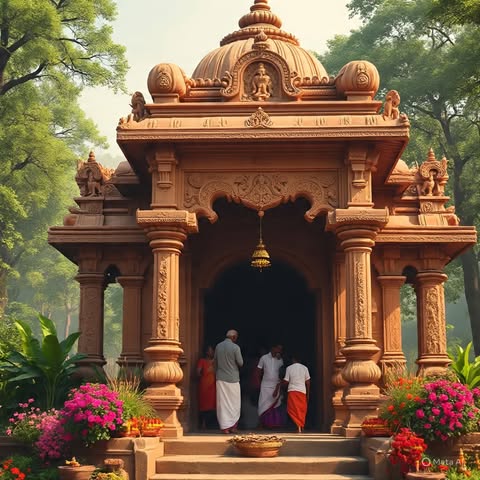
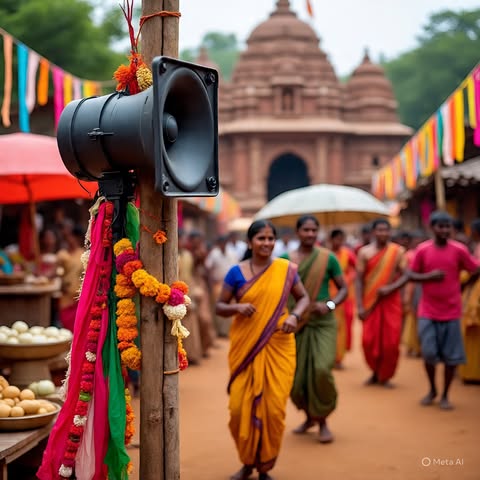
In Tamil Nadu, festivals are not marked only by dates on a calendar. They are sensed — through sound, movement, preparation, and repetition. Long before the official day arrives, villages and city neighbourhoods begin to change. Banners appear, loudspeakers are tested, temple courtyards are cleaned, and conversations slowly shift toward what is coming. This is not event marketing; it is cultural memory activating itself.
Temple festivals function as a living calendar. While urban life depends on digital reminders, many temple communities operate on collective memory. Elders remember the sequence instinctively: flag hoisting, special abhishekam days, processions, cultural performances, and final rituals. Even those who no longer attend daily still know when the big days are approaching. Children absorb this rhythm passively, learning through repetition rather than instruction.
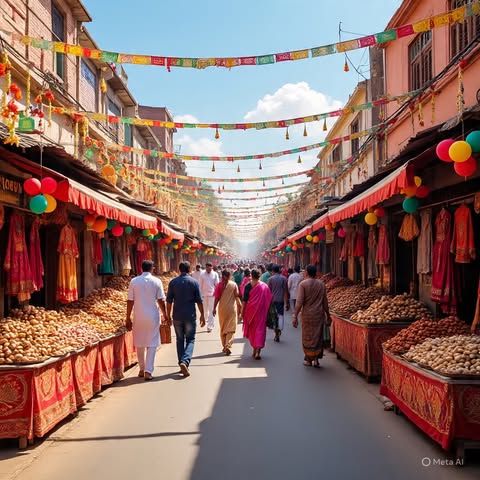
Unlike one-day celebrations, most temple festivals stretch across several days or weeks. Each day has its own tone. Early days are quieter, attended mainly by regular devotees. As the festival progresses, crowds grow thicker. Shops pop up around temple streets selling toys, bangles, snacks, and garlands. For many vendors, these weeks provide essential seasonal income. Culture here supports economy without formal planning.
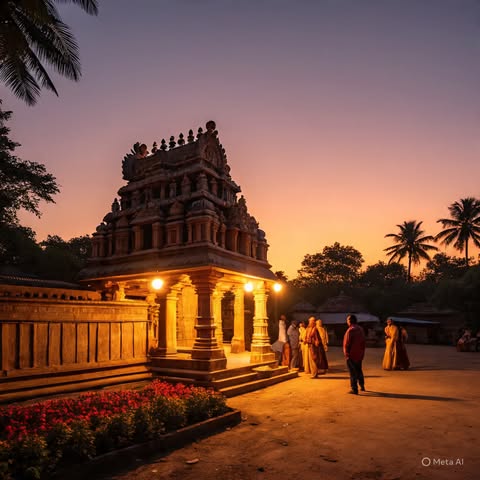
Processions are the most visible symbol of temple festivals. Deities leave the sanctum, travelling through streets on decorated vehicles — chariots, vahanams shaped like animals, flowers, or mythological symbols. Streets temporarily become sacred space. Residents light lamps at their doorsteps, even if they are not regular temple-goers. Participation does not require belief; presence is enough.
For devotees, festivals are moments of emotional anchoring. People time important life events around them — naming ceremonies, marriage proposals, vows. Some attend seeking relief, others gratitude. The temple does not ask why. It receives all with the same rhythm. We avoid framing these experiences as psychological or medical outcomes. What we document is cultural behaviour: how people repeatedly turn toward shared spaces during moments of intensity.
Urban temples operate differently from village temples, but the principle remains. In cities, festivals require coordination with authorities, traffic diversions, and sound regulations. The scale may be reduced, the timings adjusted — yet attendance remains strong. Even those who rarely enter temples during the year often make exceptions during festivals. Cultural memory overrides routine.
Diaspora Tamil communities recreate this calendar in adapted forms. Without large temples or extended holidays, festivals are condensed into weekends. Processions become indoor events. Yet symbols remain: the same songs, the same prasadam, the same stories told to children. These adaptations reveal something important — tradition survives not by rigid preservation, but by flexible repetition.
Criticism of festivals often focuses on inconvenience — noise, crowds, disruption. These concerns are valid and must be addressed responsibly. But removing festivals entirely would remove more than sound. It would erase one of the few remaining systems where communities gather without commercial transactions as the primary motive.
Temple festivals do not belong only to priests or devotees. They belong to tailors who stitch flags, electricians who install lights, musicians who practise seasonal compositions, and families who open their homes to visiting relatives. This distributed participation is why festivals persist despite changing lifestyles.
As modern life fragments attention, these festivals offer something rare: continuity. They return each year, slightly altered but recognisable. In documenting them, VividTamil does not aim to preserve them unchanged. We aim to record how they continue — imperfectly, loudly, beautifully — as a living calendar that refuses to disappear.
Comments / கருத்துக்கள்
No comments yet. Be the first to comment!
Leave a comment