
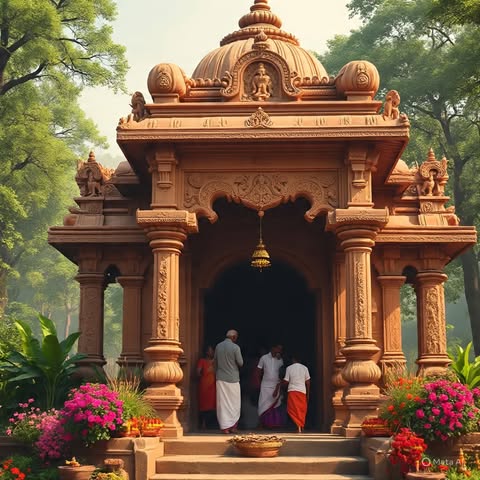

The first sound in many Tamil towns is not traffic, but a bell. Sometimes it is faint, carried by wind; sometimes it is sharp and close, ringing from the small temple at the street corner. For devotees, early morning temple rituals are not performances. They are rhythm — something that shapes how the day begins. காலை வழிபாடு என்பது சடங்கு மட்டுமல்ல; அது ஒரு மனநிலையும் பழக்கமும்.
At dawn, priests open sanctums quietly. Oil lamps are lit one by one. Incense smoke rises slowly, mixing with the smell of wet stone floors just washed with water. Devotees arrive barefoot, some carrying flowers, others empty-handed but focused. There is very little talking. Even children sense that this is a different hour. In many temples, the first abhishekam is attended by only a handful of people — retirees, shopkeepers before opening time, women who have finished early household work.
For outsiders, the rituals may seem repetitive. For regulars, each morning feels slightly different. The temperature changes, the crowd shifts, the chant tempo varies. Some days the priest recites slowly; some days faster. Certain days carry festival energy; others are plain weekdays. Tamil devotees often do not analyse this consciously — they simply feel it.
In our conversations, many elders said morning temple visits help them regulate emotions. They do not describe this as therapy. ‘Manasukku amaithi,’ one woman said — peace for the mind. We avoid presenting such experiences as medical claims. Mental and physical health concerns must always be handled by qualified professionals. But culturally, temples remain spaces where people pause, breathe and re-centre before facing the world.
For younger generations, especially those growing up abroad, morning temple rituals can feel unfamiliar. Early hours clash with school schedules; language barriers make chants difficult to follow. Some families adapt by lighting a small lamp at home, reciting one simple line together. The form changes, but the intention remains. VividTamil documents these shifts not to judge them, but to record how culture evolves without breaking.
As cities grow louder, these quiet hours become more precious. Whether you attend daily or only occasionally, stepping into a temple before sunrise offers something rare — a shared silence. In that silence, Tamil culture continues, unannounced and unrecorded, except in memory. This article is our attempt to pause and notice it.

Comments / கருத்துக்கள்
No comments yet. Be the first to comment!
Leave a comment